
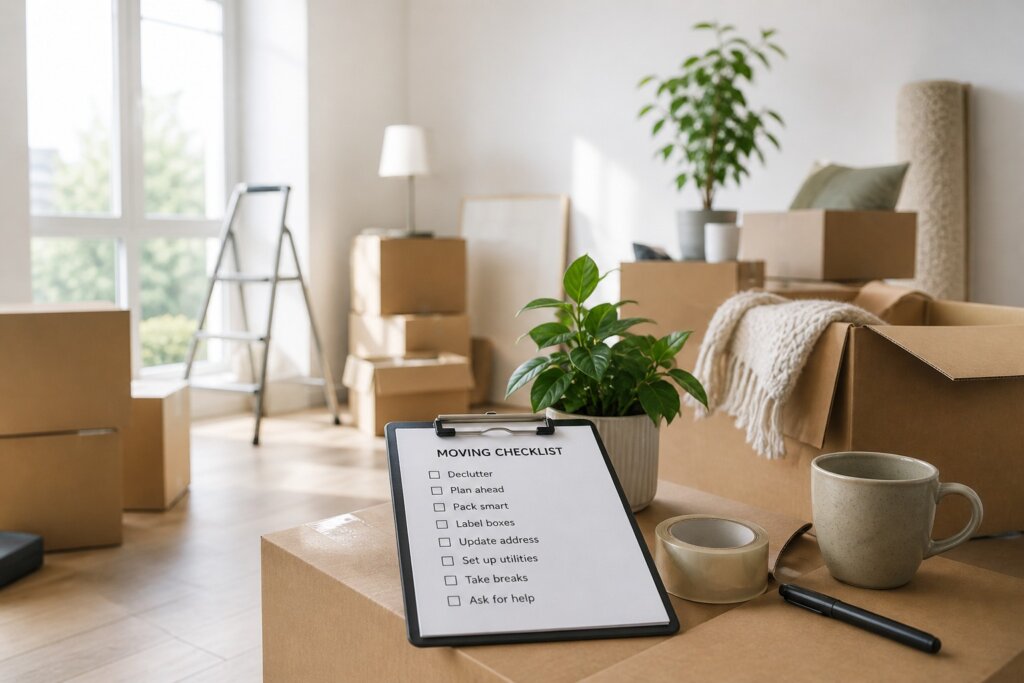
Selling a house while preparing to move out of California creates two deadlines that must work together: the real estate closing and the physical move.
A missing document, unavailable elevator, blocked moving truck, or unclear possession date can cause problems even when the sale itself is moving forward. The most practical approach is to treat the closing and move as one coordinated project.
Confirm your contract dates, create a property-handoff plan, schedule movers, transfer services, remove your belongings, and decide who will manage the house if you leave before the deed records.
This checklist is designed for homeowners selling in San Francisco, Oakland, San Mateo County, Santa Clara County, Contra Costa County, Marin County, and nearby Bay Area communities before relocating out of state.
Quick Answer
Before moving out of the Bay Area, confirm your closing and possession dates in writing. Organize seller documents, hire a properly authorized mover, reserve building or street access, transfer utilities and insurance carefully, remove agreed belongings, and plan the final key handoff. Keep a reliable local contact if you must leave before closing.
Confirm Which Date Controls Your Move
The closing date and the date you must leave the property are not always the same practical deadline.
Your purchase agreement and escrow instructions should explain when the buyer receives possession, when personal property must be removed, and how keys will be delivered.
Ask your real estate agent, attorney, or escrow professional to confirm:
- Your scheduled signing date
- The expected closing or recording date
- The possession deadline
- Whether the buyer will complete a final walkthrough
- Which appliances or other items must remain
- How keys, remotes, and access devices will be delivered
- What happens if the closing is delayed
Do not reserve a moving truck based only on an estimated closing date. A title issue, missing signature, mortgage-payoff delay, buyer contingency, or document problem could change the schedule.
California home sales commonly use escrow to coordinate documents, funds, title matters, and written instructions. The California Department of Real Estate provides an official overview of the California escrow process.
Homeowners still deciding when or how to sell can first read the complete guide to selling a Bay Area house when relocating out of state.
Create One Closing-to-Moving Timeline
Maintain one calendar instead of separate home-sale and moving lists. Include contract deadlines, inspections, document delivery, mover arrival, utility changes, final cleaning, the buyer’s walkthrough, key delivery, and your travel date.
Two to four weeks before moving
Use this period to:
- Confirm the closing and possession plan
- Collect mortgage, title, HOA, repair, and permit documents
- Book movers or reserve a truck
- Request building or street access
- Begin sorting, donating, and packing
- Obtain written moving estimates
- Identify items that will remain with the house
- Arrange help for children, pets, or older family members
- Choose a local backup contact
For an interstate move, check whether the mover is registered and authorized through the Federal Motor Carrier Safety Administration’s registered mover database. Interstate movers must have federal registration and a U.S. DOT number.
California’s Bureau of Household Goods and Services also advises consumers to check mover licensing and authorization. Its household mover information page provides state consumer guidance and license-search access.
One week before moving
Confirm:
- The mover’s arrival window
- Parking, loading, elevator, and gate access
- Utility transfer dates
- Insurance coverage through possession
- Final cleaning arrangements
- Trash and unwanted-item removal
- Buyer walkthrough timing
- Mail forwarding
- Key and remote delivery
- Emergency contacts
Walk through every storage area, including the garage, attic, basement, crawlspace entrance, exterior shed, and locked cabinets. Compact storage spaces and shared building areas are easy to overlook during a rushed move.
The final 48 hours
Pack a separate travel bag containing identification, medications, chargers, closing contacts, important documents, basic clothing, and anything you cannot risk placing on the moving truck.
Photograph the condition of each room after removing your belongings. Keep receipts for moving, cleaning, hauling, and agreed repairs.
Do not leave paint, chemicals, propane, food, trash, or unwanted furniture unless your contract or a written agreement with the buyer clearly allows it.
Reserve Moving-Truck and Building Access Early
Moving access can be difficult in San Francisco and other dense Bay Area communities. Hills, narrow streets, limited curb space, loading restrictions, garage clearance, and shared elevators can affect the move.
San Francisco provides temporary tow-away signs for moving vans and other temporary parking needs. Review the city’s current temporary no-parking sign process early enough to meet its application and posting requirements.
If you live in a condo, TIC, apartment-style building, or HOA community, ask management about:
- Elevator reservations
- Permitted move-out hours
- Loading-zone access
- Move-out deposits
- Certificates of insurance
- Protective elevator padding
- Garage or gate clearance
- Large-truck restrictions
- Weekend or holiday rules
Do not assume the buyer’s move-in reservation also covers your move-out.
Prepare a Complete Property Handoff
A clear handoff reduces calls and confusion after closing.
Organize and label:
- Front, side, garage, mailbox, and storage keys
- Gate and garage remotes
- Alarm instructions
- Smart-lock access
- Thermostat or security-device information
- Appliance manuals
- Warranty documents
- HOA or building contacts
- Contractor and repair records
- Trash and recycling schedules
- Irrigation or landscaping instructions
- Codes for shared access areas
Remove your personal accounts and passwords from smart-home devices. Reset or transfer the equipment according to the manufacturer’s instructions.
Do not cancel water, electricity, security, or climate-control services too early. The property may need essential services through the final walkthrough and possession transfer. Confirm the correct transfer date with the buyer, agent, or escrow professional.
Decide What Stays With the House
The purchase agreement should identify the fixtures and personal property included in the sale. Disagreements often occur when the seller assumes an item can be removed while the buyer expects it to remain.
Confirm the treatment of:
- Wall-mounted televisions and brackets
- Refrigerators and other appliances
- Window coverings
- Attached shelving
- Outdoor storage units
- Security cameras
- EV charging equipment
- Patio furniture
- Potted plants
- Spare flooring, tile, or paint
- Water-filtering equipment
When an item is unclear, obtain a written agreement before moving day.
Protect the Property If You Leave Before Closing
Your job, flight, or new-home schedule may require you to leave California before the sale is complete. If that happens, prepare a written local oversight plan.
Ask a trusted person or service provider to:
- Check doors and windows
- Remove mail and packages
- Watch for leaks or damage
- Provide access to inspectors and contractors
- Maintain agreed utilities
- Handle landscaping and trash
- Respond to alarms
- Confirm the property’s condition before closing
Tell your insurance provider when the occupancy status changes. Ask whether an extended absence or vacancy affects your policy, inspection requirements, or coverage. Do not assume an occupied-home policy covers every vacancy-related risk.
When the property is not yet under contract or the timeline becomes uncertain, review the available options for selling a Bay Area house before an out-of-state move.
Update Your Address, Mail, and Vehicle Records
Submit mail forwarding through the official USPS change-of-address service. USPS also provides an in-person option through its Mover’s Guide and PS Form 3575.
Update your address with:
- Banks and credit-card companies
- Employers and payroll providers
- Insurance companies
- Medical providers and pharmacies
- Schools
- Subscription services
- Tax and legal professionals
- Voter-registration authorities
- Professional licensing organizations
- HOA or property managers
- Trusted family contacts
California DMV provides separate instructions for people moving out of state and for vehicles that will be registered elsewhere. Its guidance says California residents should report an address change within 10 days. Review the DMV’s moving-out-of-state instructions instead of assuming mail forwarding updates driver and vehicle records.
Prepare for the Final Walkthrough
The buyer may complete a final walkthrough shortly before closing to confirm the property’s condition and check whether agreed repairs and included items remain.
Before the walkthrough:
- Remove personal belongings and trash
- Complete agreed work
- Leave included items in place
- Confirm necessary utilities are operating
- Clean accessible areas
- Secure doors and windows
- Report new damage promptly
- Keep proof of completed repairs
A final walkthrough is not the time to renegotiate what stays with the property. Resolve those questions before packing.
Confirm Remote Signing and Payment Procedures
When closing from another state, ask the escrow or title provider:
- Which documents can be signed electronically
- Which signatures require notarization
- Whether original documents must be mailed
- How your identity will be verified
- How mortgage-payoff information will be handled
- How sale proceeds will be delivered
- Who will collect or deliver the keys
- Whether you must complete any step in person
Never follow changed wire instructions based only on an unexpected email. Contact a known escrow or title representative using a number you obtained independently.
This article provides general homeowner education, not legal, tax, financial, insurance, or real estate advice. Contract duties and closing requirements vary. Consult the appropriate professional for your transaction.
Compare Your Selling Path Before the Move Becomes Urgent
A homeowner with enough time and a market-ready property may prefer a traditional listing. Someone with a firm departure date, major repairs, accumulated belongings, or a property that will become vacant may also compare an as-is listing or direct offer.
Use the Bay Area Home Offers agent-versus-direct-sale comparison to review differences in preparation, showings, financing, expenses, and possible sale price. A traditional listing may provide greater market exposure, while a direct sale may reduce some preparation and buyer-financing uncertainty.
For a broader process overview, read the step-by-step guide to selling a house fast in San Francisco.
An as-is sale can reduce repair commitments, but it does not automatically eliminate disclosures, inspections, contingencies, or title review. The guide to the pros and cons of selling a Bay Area house as-is explains those tradeoffs.
Frequently Asked Questions
What should Bay Area home sellers do before moving out of state?
Confirm the closing and possession dates, book movers, reserve parking or building access, transfer services, organize documents, remove belongings, and plan the key handoff. Keep a local contact if you will leave before closing.
Can I move out before my California home sale closes?
Yes, but you remain responsible for the property until your contract and closing documents state otherwise. Arrange insurance, utilities, security, maintenance, access, and a local emergency contact.
When should I cancel utilities at the house?
Do not cancel essential services based only on your travel date. Confirm the possession and transfer plan with the buyer, agent, or escrow professional so the property remains protected through the final walkthrough.
Do I need a parking permit for a moving truck in San Francisco?
You may need temporary tow-away signage or another parking arrangement depending on the location. Check San Francisco’s current moving-van parking process and your building’s requirements before moving day.
How should I choose a mover for an out-of-state move?
Get written estimates, review insurance and valuation options, check whether the company is a carrier or broker, and verify its federal authorization. Do not choose a mover based only on the lowest quote.
What should I leave for the buyer after closing?
Leave all agreed fixtures and personal property, along with keys, remotes, access codes, manuals, warranties, and useful property information. Confirm questionable items in writing before removing them.
Complete the Sale Without Letting the Move Control Your Decision
A smooth Bay Area departure depends on more than packing boxes. The closing date, possession, mover access, utilities, insurance, property condition, and key handoff must work together.
Begin early, keep important agreements in writing, and use one calendar for both the sale and the move. The goal is to prevent avoidable surprises while protecting the property and completing the handoff responsibly.
Bay Area Home Offers is a local property buyer serving homeowners across the San Francisco Bay Area. Homeowners comparing an agent listing, an as-is sale, and a direct sale can review how the Bay Area Home Offers process works.
When a direct sale appears to fit your property condition and moving schedule, you can request a no-obligation property offer or call (415) 729-4185. Compare the written offer with your other selling options before deciding.